
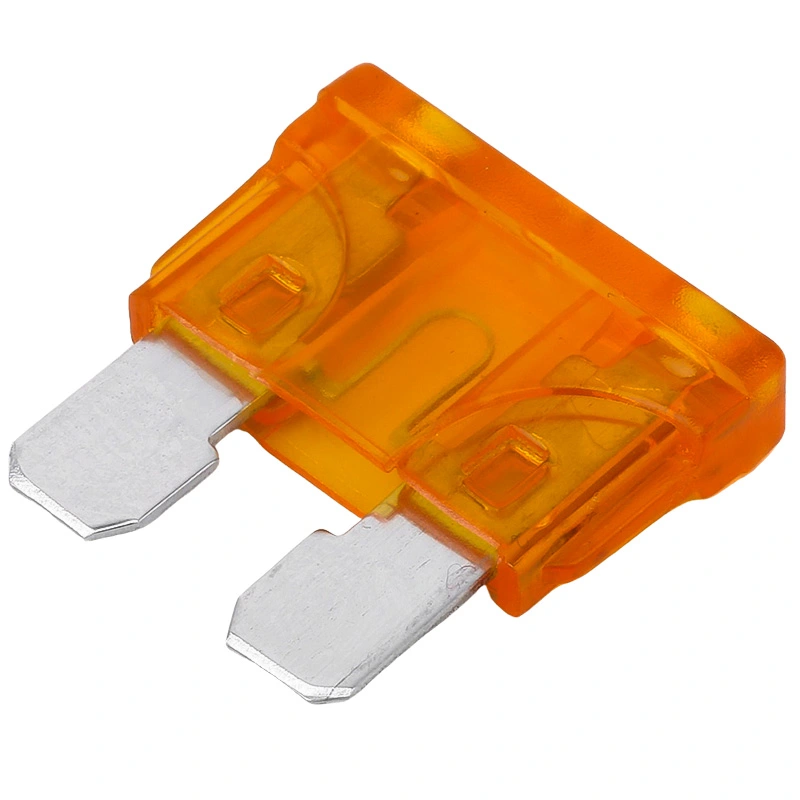
A blade fuse that opens once is doing its job. The same one opening every few weeks, always in the same position, is telling you that the circuit has a problem nobody has found yet. Replacing it fixes nothing, and fitting a higher rating — the most common response — turns a nuisance into a wiring fire risk. This article works through the five causes we see most often, in the order worth checking them.
Confirm It Is Really the Same Fault
Before diagnosing, establish what you are dealing with. Is the device opening instantly, or after minutes or hours of operation? Instantly suggests a short circuit or a very high inrush. After a delay suggests a sustained overload or heat-related behaviour. Does it happen on a hot day, or when a particular accessory is used, or after the vehicle has been sitting? Pattern is diagnostic. A device that only opens in summer is pointing at thermal derating or a resistance problem that worsens with temperature. One that only opens when a specific load switches on is pointing at inrush. And confirm the rating actually fitted matches the rating specified. In our experience a meaningful share of "repeated failure" cases turn out to be a device someone substituted with the wrong value or the wrong speed type months earlier.
Cause One — Resistance Where It Should Not Be
Excess resistance in the circuit raises current above the design value and adds heat at the point of resistance. The usual locations are the holder terminals, a corroded crimp, a loose ring terminal at the distribution post, or a ground point that has corroded where it meets the body. Any of these can add enough resistance to push a marginal circuit over the threshold. Resistance in the holder itself is especially common and especially misleading, because the device sits in it and gets hot from both directions: from its own current and from the heat generated by the poor contact next to it. A device can open purely from external heat with the circuit current entirely normal. Check for discolouration, for a holder that feels loose when the device is inserted, and for terminals that have lost their spring tension.
Cause Two — Undersized Cable or a Shared Return
If the circuit was modified at some point — an accessory added, a longer run installed, a device replaced with a higher-power one — the cable may no longer be adequate. Undersized cable runs hot, its resistance increases further as it heats, and the current in a marginal circuit drifts upward. Voltage drop at the load can also make a device draw more current to deliver the same power, which compounds the problem. Shared returns are the subtler version. Two circuits sharing a return path means the return carries the sum of both currents, so each individual circuit looks fine on paper while the shared conductor is overloaded.
Cause Three — Inrush the Device Was Never Sized For
Motor loads, solenoids, compressors, and anything with a large input capacitor draw a current spike far above their steady-state value when they switch on. The spike may last only tens of milliseconds, but repeated thousands of times it causes cumulative thermal fatigue in the element. The result is a device that survives for months and then opens on a perfectly normal start, apparently at random. In fact it has been accumulating damage every time the load switched on. The fix is a device with the right speed characteristic for the load, not a higher rating. Slow-blow types exist precisely for this duty, and fitting one is legitimate engineering rather than a workaround — provided the steady-state current is within the rating and the cable is protected.
Cause Four — Wrong Speed Characteristic
This is closely related to the previous cause and just as common. Two devices can carry the same current rating and look identical, yet behave completely differently under a surge. A fast-acting type protects sensitive electronics well but will not tolerate motor inrush. A slow-blow type rides through inrush but is less suited to protecting delicate semiconductors. If a fast type was fitted where a slow type belongs, or vice versa, the symptom is repeated opening with no fault current to explain it. Always confirm the specified speed characteristic as well as the current value.
Cause Five — Vibration and Mechanical Fatigue
In vehicles and mobile equipment, vibration works on the element continuously. Over time it causes fatigue, and a fatigued element opens below its rated current. This is more likely where the device is mounted on a vibrating structure, where the holder has lost retention force and allows micro-movement, or where the harness is unsupported and transmits movement into the holder. The giveaway is that the element looks intact but has separated at a point that shows no melting — a clean mechanical break rather than a fault-related one. Securing the harness and using a holder with proper retention usually resolves it.
A Diagnostic Sequence That Works
Work through this in order rather than replacing parts at random:
- Confirm the fitted rating and speed type match the specification
- Establish the pattern: instant or delayed, hot or cold, load-dependent or random
- Measure the actual steady-state current in the circuit with a clamp meter and compare it with the rating
- Measure the inrush current at switch-on and its duration
- Inspect the holder for looseness, discolouration, and loss of terminal tension
- Check the supply and ground connections, including the body ground point
- Confirm the cable cross-section is adequate for the length and current
- Inspect a failed element: a clean break suggests fatigue, a violent rupture suggests a real short circuit
That last step is genuinely informative and takes seconds. Look at the element before throwing the device away, and note the colour of the element after it has cooled.
Summary
Repeated failure in one position is a symptom, not a fault in the device. The cause is usually excess resistance at a terminal or holder, a circuit that has been modified beyond its cable capacity, an inrush the device was never specified for, the wrong speed characteristic, or vibration fatigue. Work the list in order, read the failed element, and resist the temptation to fit a higher rating.
About Our Blade Protection Range
GFEFUSE is the brand of Dongguan Gongfu Electronics Co., Ltd., an electronic protection device manufacturer founded in Dongguan, Guangdong in 2013. We develop, produce, and sell fuses, fuse holders, and fuse boxes, supported by five advanced production lines and thirteen R&D engineers, and our products are exported to customers overseas. Our blade fuse range covers standard, mini, and micro families, and it is normally paired with a holder from our automotive fuse holder selection so that retention force and terminal condition are verified together. For multi-circuit assemblies we also supply modular automotive fuse holder configurations, and the wider automobile fuse catalogue covers remaining vehicle formats. Products carry UL, cULus, TUV, CE, and CQC certification and comply with RoHS and REACH directives, serving automotive electronics, new energy, power equipment, communication systems, and consumer electronics.
Conclusion
Every device that opens has a reason, and in a circuit that fails repeatedly the reason is nearly always upstream of the part itself. Measure the current, measure the inrush, inspect the holder, and read the failed element. Those four steps find the cause in almost every case, and they cost far less than a series of replacement parts.
Tell us the circuit voltage, steady-state and inrush current, and the holder style you are using. We will help you confirm the right rating and speed characteristic.
Frequently Asked Questions
Short answers on diagnosing repeated blade type device failures.
Why does my blade fuse keep blowing in the same circuit?
The usual causes are excess resistance at the holder or a corroded terminal, undersized cable, inrush the device was never sized for, the wrong speed characteristic, or vibration fatigue. Work through them in that order rather than replacing parts at random.
Is it safe to fit a higher rated blade fuse?
No. The rating protects the wiring. Fitting a higher value moves the weakest point into the harness, where it will not fail safely. Find the cause of the overcurrent instead.
Can a bad holder cause a blade fuse to blow?
Yes. A loose or corroded holder generates heat at the contact, and the device sitting in it heats from outside as well as from its own current. It can open with normal circuit current.
What does a clean break in the element mean?
It usually indicates mechanical fatigue, often from vibration or a holder that has lost retention force, rather than an electrical fault. A violent rupture with heavy melting indicates a genuine short circuit.
Do motor circuits need a different type?
Often yes. Motors draw a large starting surge, so a slow-blow characteristic is frequently specified. Confirm both the current rating and the speed type from the circuit design rather than matching the old part by colour alone.